

Hiking
Hiking with power
the complete guide to compression for multi-day tours
Before the tour: train with the compression advantage
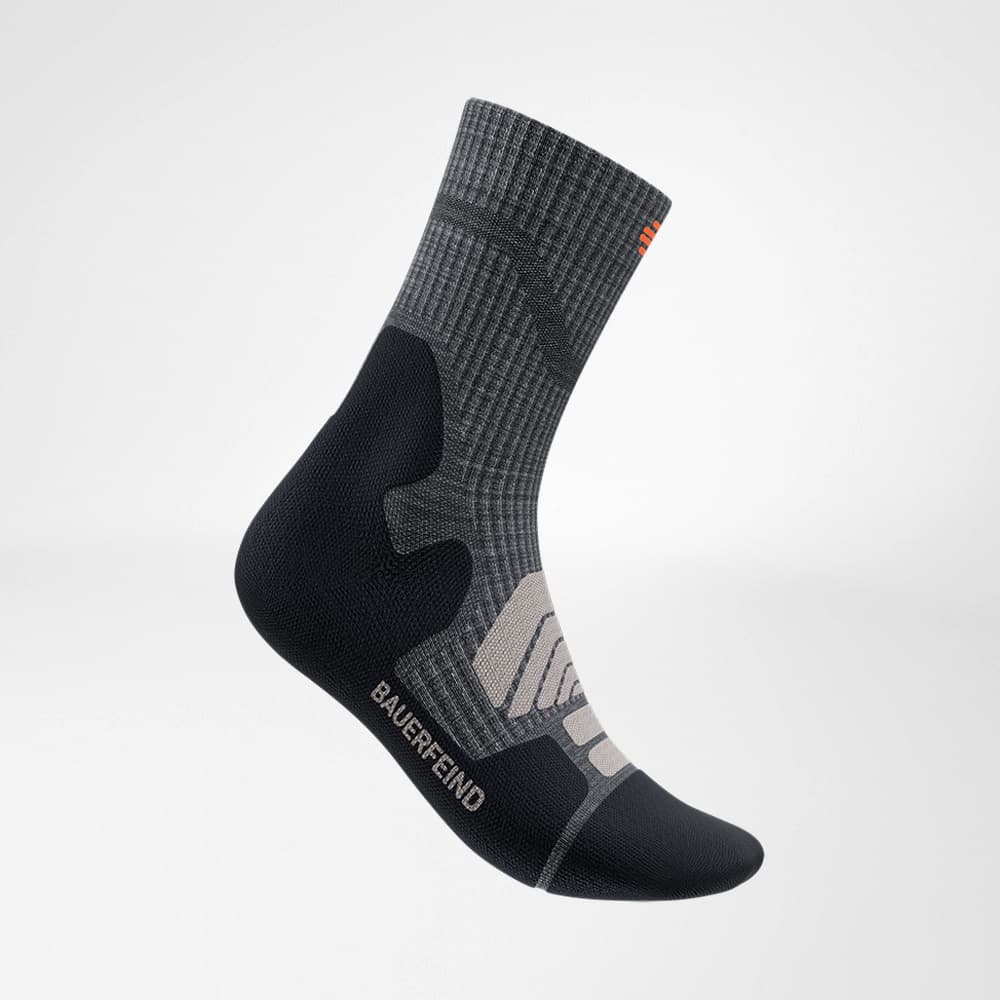
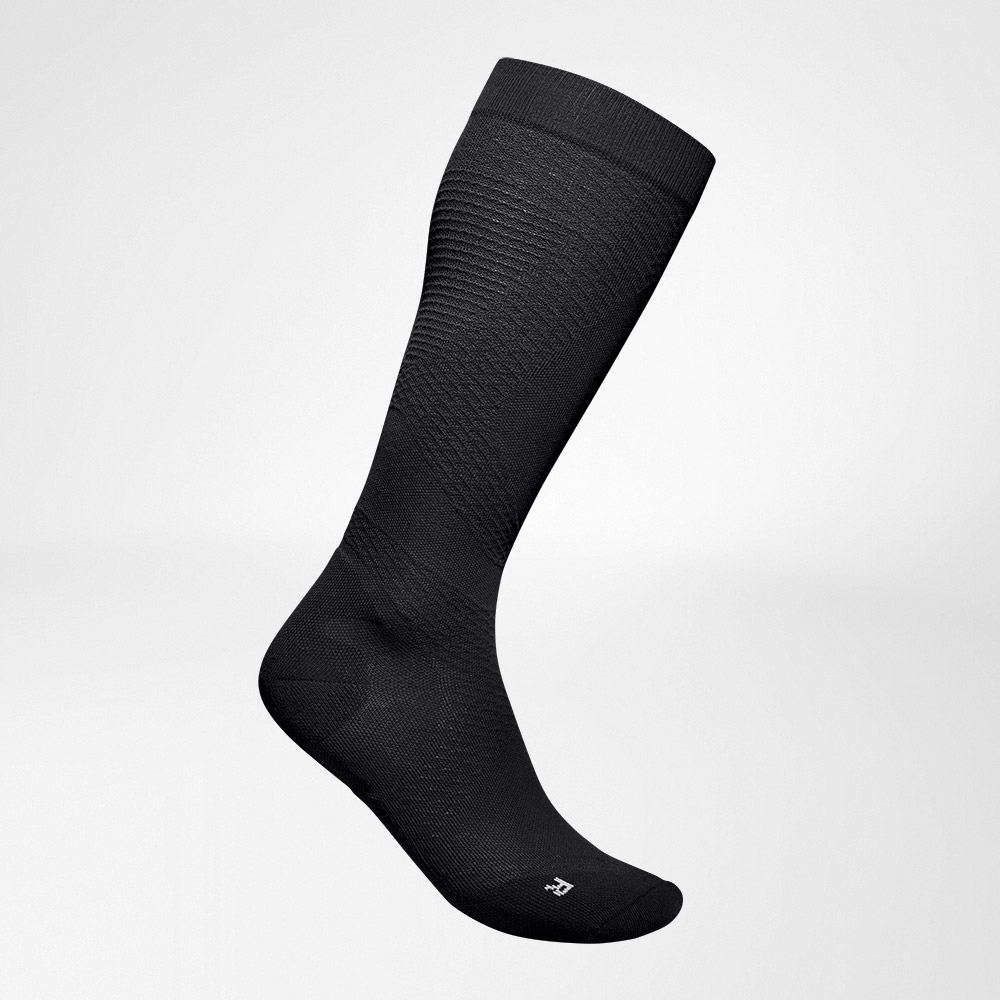
Preparation is everything for big hiking adventures, it decides not only success, but also how much fun you’ll have. Training with compression helps your body adapt more effectively to training stimuli. Hiking compression socks such as our Outdoor Merino Compression Socks or the Run Ultralight Compression Socks increase blood circulation during training. That means more oxygen in your muscles, faster available energy and better endurance on longer training runs.
Our outdoor and hiking products with and without compression



The training strategy:
- Regular 15–20 km training runs with compression (3–4x per week, 4–6 weeks before the tour)
- Build targeted core stability – essential for multi-day loads²
- Train hill sessions with lighter compression support
- The effect: your connective tissue adapts, joints become more stable, and fatigue kicks in later.
During the tour: performance under full load
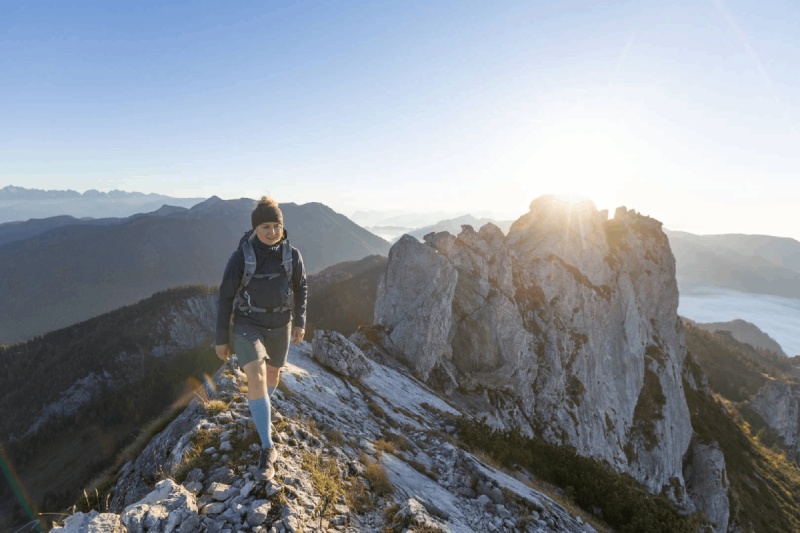
On multi-day routes, it gets tough when initial strength fades and mental strain increases.
What compression does here
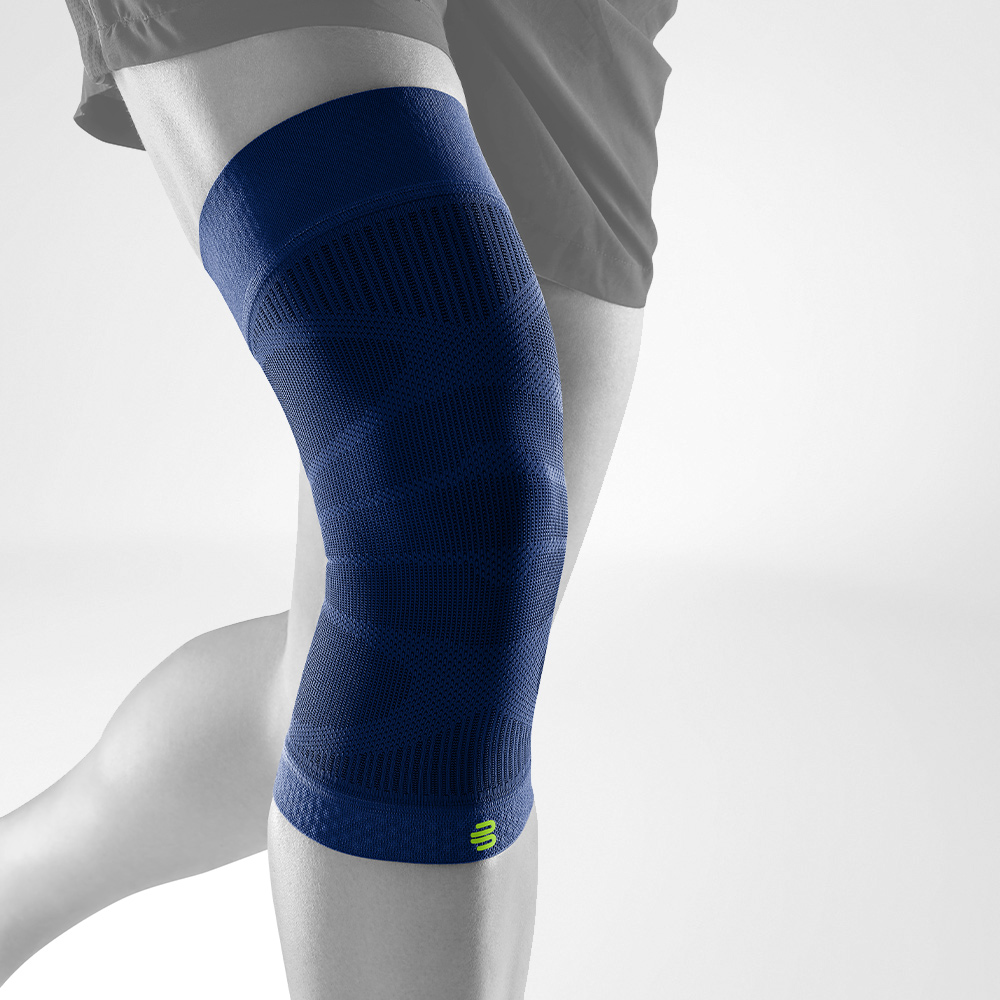
Hiking compression socks such as our Outdoor Merino Compression Socks and Ultralight Compression Sock actively support your calf muscles and reduce muscle vibrations with every step³. Sleeves such as our Sports Compression Sleeves Upper Leg can also help. This relieves your joints, which are under extreme load anyway with 25,000+ steps per day.
Practical effects on the tour:
- Less muscle fatigue: muscles work more efficiently, lactate is cleared faster³
- Stability on uneven terrain: more stability and a secure step on descents and slippery sections
- Consistent leg freshness: your legs stay fresh and dynamic for longer
Your recovery plan for every multi-day hike:
- Put on compression such as the Sports Recovery Compression Socks immediately after arrival for at least 2–3 hours
- Elevate your legs and consciously relax for 15 minutes
- Breathe deeply into your belly and exhale slowly through your nose
- At night: rest your legs flat without compression
- In the morning, well recovered, slip back into your compression socks

The right packing list
As an experienced hiker, you probably know quite well what to pack for a multi-day trekking tour. Still, it’s worth taking a look at our article “This belongs on your packing list”. Because you’ll find not one, but three different hiking packing lists there.
Conclusion on Compression for Multi-Day Hikes
Multi-day hikes demand a lot from you, and compression can be a great help. With the help of compression, you can train more efficiently beforehand, stay fresher longer on the trail, and recover faster afterward. But above all, it helps you have more energy for what really matters: racking up the kilometers and enjoying nature.
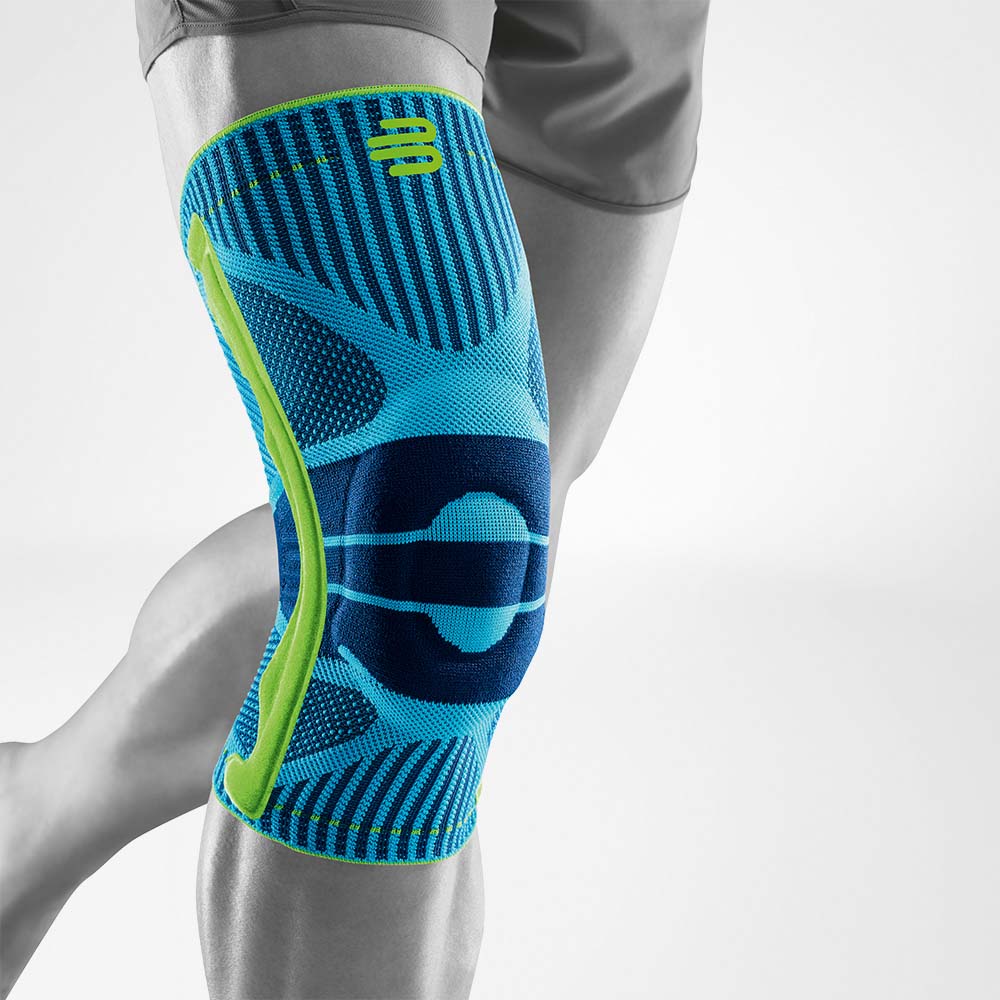
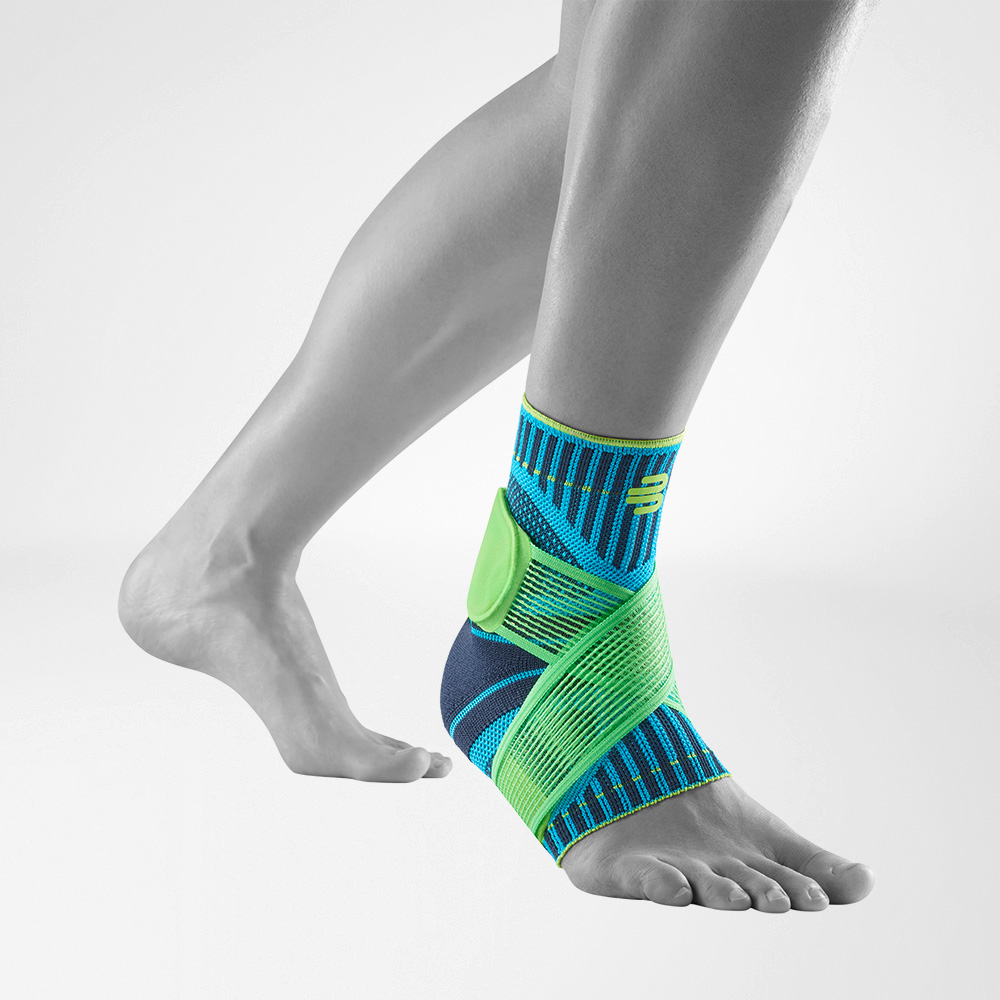
Our top products for you



About the author
Martin is a passionate athlete, primarily active in endurance disciplines such as cycling, running, and triathlon. However, he also enjoys taking on challenges that aren't his forte (like extreme hiking). As a certified fitness trainer with an A-license and an Ironman finisher, he has already conquered a number of challenges. Climbing and bouldering have been among his sporting passions since 2019.
List of sources
1: Hill, J. A., Howatson, G., van Someren, K. A., Leeder, J., & Pedlar, C. (2014). Compression garments and recovery from exercise-induced muscle damage: A meta-analysis. British Journal of Sports Medicine, 48(18), 1340–1346.
2: Markovic, G., Grsumic, V., Zoric, G., & Mikulic, P. (2021). The effect of compression socks on maximal exercise performance and recovery in insufficiently active adults. International Journal of Environmental Research and Public Health, 18(16), 8530.
3: Broatch, J. R., Tennent, D. J., Hector, A. J., et al. (2022). Compression-induced improvements in post-exercise recovery are associated with enhanced muscle blood flow. Scientific Reports, 12, 16847.
4: Partsch, H., Winiger, J., & Lun, B. (2013). Effects of compression socks on muscle recovery after induced muscle fatigue in athletes. Asian Journal of Sports Medicine, 4(3), 185–192.