Fitness
HYROX injury
Common problems, causes & prevention

Load profile in HYROX: what really stresses the body
To understand the injury risk in HYROX training, you need to know its specific load structure. The alternation of running and station workouts without real breaks continuously challenges the cardiovascular system at 70 to 90% of VO2 max. On top of that, there are load peaks that place heavy stress on both active and passive movement structures.
- Sled Push / Sled Pull: Loads of up to 202 kg stress the knee extensors, quadriceps tendon and lumbar spine through shear forces of 2 to 3 times body weight
- Burpee Broad Jumps: Ground reaction forces of 4 to 6 times body weight on wrists, shoulder joint and ankle joint; 80 repetitions per event
- Farmers Carry: Heavy grip load stresses the forearm muscles; neck and core under constant anti-flexion load
- Sandbag Lunges: More than 100 deep squats per leg stress the patellar tendon, hips and glute muscles
- Wall Balls: 100 throws with 4 to 9 kg to a target at a height of 2.75 or 3.05 m stress the rotator cuff and shoulder abduction
In addition, the competition duration of 60 to 90 minutes for recreational athletes leads to strong neuromuscular fatigue. Studies show that the knee valgus angle increases by 15 to 25% after running. A clear indicator of technique loss under load.

Common HYROX injuries: from knee to shoulder
The typical injuries among HYROX athletes reflect the demands of the format. Findings from running, strength and functional fitness research 2;3;4; show clear patterns:
- Knee problems: Patellofemoral pain syndrome (25 to 35% prevalence), jumper’s knee caused by sled work and lunges, meniscus irritation caused by fatigue-related valgus
- Achilles tendon and shin splints: 30 to 50% of athletes with a strength training background report pain within 4 to 6 weeks after starting training, caused by an abrupt increase in running volume
- Lumbar spine: Lumbar strains and facet joint dysfunctions (10 to 20%) caused by heavy sled and carry exercises without sufficient core stability
- Elbows and wrists: Tendon irritation caused by repetitive burpee push-up phases and heavy grip exercises such as Farmers Carry and Sled Pull
The reason for most injuries is not a single wrong movement, but repeated incorrect loading under fatigue. This is a pattern that explains 60 to 70% of all overuse problems in functional training.

Typical causes of injury: where HYROX athletes make mistakes
Injuries rarely happen by chance. Most of the time, they are caused by a combination of training mistakes that can be systematically avoided3:
- Missing base phase: Direct HYROX simulations without enough basic endurance and strength development increase the risk by 3 to 5 times
- Progressing too quickly: Volume increases of more than 10% per week, for example going from almost no running to 20 to 30 km per week
- Technique deficits: Beginner mistakes such as knees collapsing during the Sled Pull or elbows flaring during Wall Balls increase joint loads by 20 to 40%
- Neglected core and hip stability: Weak core and abdominal muscles in 60% of recreational athletes lead to compensatory loading
- Insufficient recovery: Missing rest days and deload phases lower heart rate variability (HRV) by 10 to 20% and promote overtraining
- Wrong pacing: Going all out at the start or at the beginning of training leads to a 25 to 35% technique breakdown toward the end of the race or workout
- Lack of patience with functional adaptation: Passive tissue structures adapt 6 to 12 weeks more slowly than muscles
- Training without a plan: A rough training plan controls training stimuli in a structured way and includes deload phases. You can find out here how to get a solid training plan from AI.
According to trainer consensus, structured planning and conscious periodization can reduce the injury risk by 50 to 70%.

Avoid HYROX injuries through prevention
Effective prevention is based on several pillars: periodization, technique, stability and recovery. Here are the concrete sports medicine recommendations7:
Load management:
- 8 to 12 weeks base phase with Zone 2 runs (60 to 70% max. heart rate, 2 to 3 times per week)
- Functional full body strength training with squats and deadlifts (3x 8 to 12 repetitions)
- Only then integrate specific HYROX workouts
Technique training:
- Weekly sessions with 50 to 70% of race load
- Focus on a neutral spine, stable knee axis and efficient shoulder position
- Reduction of the valgus angle by 15 to 20% through targeted movement technique training
Stability work:
- 2x per week core program: planks (3 to 5 min.), anti-rotation, glute bridges (3x15)
- Relief for knees and lumbar spine by 25 to 30%
Recovery management:
- 1 to 2 complete rest days per week as a fixed routine
- Deload weeks every 4 to 6 weeks (50% volume)
- 7 to 9 hours of sleep as the foundation for performance
- Healthy, protein rich nutrition
Warm-up:
- 10 to 15 minutes dynamic warm-up with joint mobilization
- Specific activation for glutes, calves and shoulders
Early warning signs:
Persistent pain for more than 7 days, swelling or loss of strength should lead to a doctor’s visit or physiotherapy.

Targeted support for knees, ankles & co.
Specifically developed supports and compression products can fulfill two roles in the HYROX context: preventive stabilization and recovery support. Useful areas of use6:
Knee: Sports Knee Support for patellar complaints and prevention supports patellar tracking during lunges and sled work
Ankle: Sports Ankle Support or Sports Ankle Support Dynamic improve proprioception in athletes with a history of ankle rolling, relevant during running and burpees
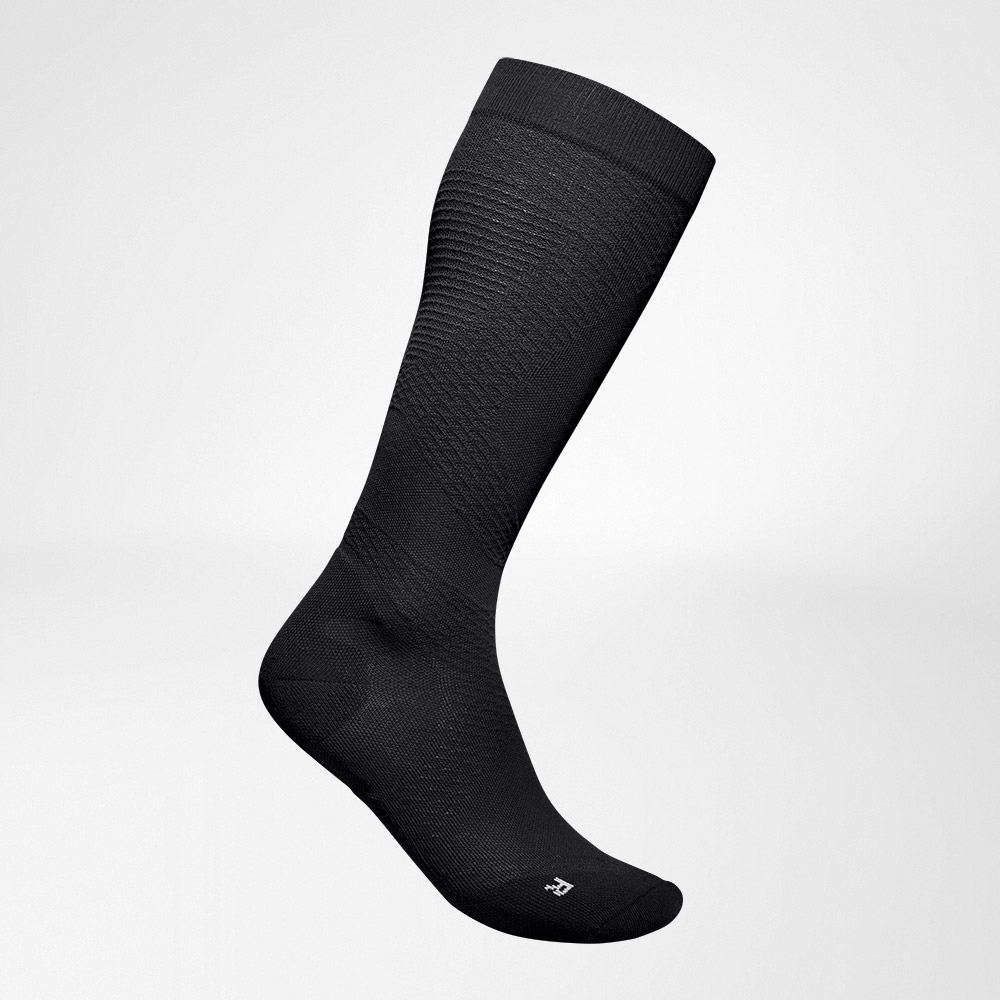
Lower leg: Sports Compression Sleeves Lower Leg reduce muscle vibration and support venous return during intense runs
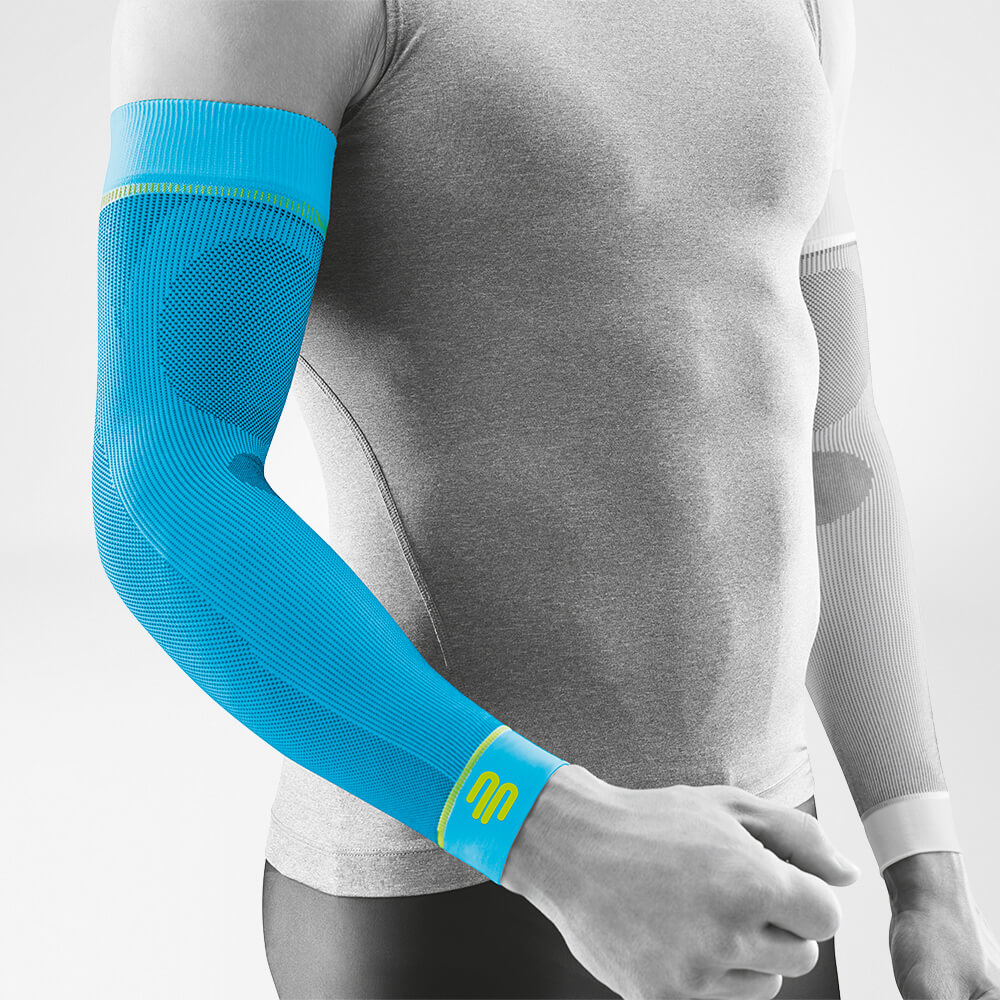
Thighs and arms: Compression Sleeves can reduce DOMS (Delayed Onset Muscle Soreness) by 15 to 25% during exercises with high repetition numbers
Conclusion: enjoy HYROX healthily with a plan, technique and body awareness
HYROX is an intense, motivating competition that comes with an increased injury risk if preparation is wrong. The central findings:
- Structured training with a base phase, specific phase and recovery significantly reduces HYROX injuries
- Good movement technique, stable core and hip muscles and controlled progression protect knees, back and shoulders
- Medically based supports can support training and recovery as an addition, but do not replace professional diagnostics
Anyone who listens to their body, manages training stimuli smartly and uses medically validated aids when needed can practice HYROX long term with strong performance and largely injury free. Progress comes with patience, not with energy wasted on avoidable injuries.
List of Sources:
1 Feito et al. im Orthopaedic Journal of Sports Medicine (2022), van Gent RN, Siem D, van Middelkoop M, et al. Incidence and determinants of lower extremity running injuries in long distance runners: a systematic review. Br J Sports Med. 2007.
2 Paterson RS, Asatryan A, et al. Strength training as superior, dose-dependent and safe prevention of acute and overuse sports injuries: a systematic review, qualitative analysis and meta-analysis. Br J Sports Med. 2018.
3 Collins NJ, Barton CJ, et al. Incidence and prevalence of patellofemoral pain: a systematic review and meta-analysis. PLoS One. 2018.
4 Bertelsen ML, Hulme A, Petersen J, et al. A systematic review of the association between training load and running-related injuries. Br J Sports Med. 2017.
5 Esculier JF, Dubois B, et al. PEACE and LOVE for soft tissue injury management. Br J Sports Med. 2020/2019
6 Ghai S, Nilson F, Gustavsson J, Ghai I. Influence of compression garments on proprioception: a systematic review and meta-analysis. Ann N Y Acad Sci. 2024.
7 Farley C, et al. Strategies to prevent and manage running-related knee injuries: a systematic review and meta-analysis. Br J Sports Med. 2022.
More power for your best running performance with our running products